顯示具有 太古宙 標籤的文章。 顯示所有文章

2025年3月18日 星期二

因為火山才有我們呼吸的氧氣?

 原文網址:https://www.u-tokyo.ac.jp/focus/en/press/z0508_00396.html

一般認為自25億年前開始,能行光合作用的微生物以相對較快的速度增加之後,地球的大氣就一直含有豐富的氧氣。而某些前導事件,又稱為「短暫氧化事件」(whiff)可能為豐富氧氣的產生打開了門路。東京大學的研究人員參與在內的團隊提出了一種機制來解釋這些事件,他們的發現提出火山活動改變環境條件的程度足以使氧化加速,而短暫氧化事件就是此過程的體現。

數十億年前的生地化循環。地質上的不同腳色,包括火山、地表之下的地函、海洋與大氣之間的複雜交互作用網絡,形成了早期生命要讓大氣氧化所需的化學混和物。圖片來源:東京大學


2024年5月10日 星期五

堅若磐石:研究得出新的機制來解釋大陸如何穩定下來

 原文網址:https://www.psu.edu/news/research/story/rock-steady-study-reveals-new-mechanism-explain-how-continents-stabilized/

by Matthew Carroll

一類古老、遼闊、稱為穩定地塊的大陸地殼幫助地球的陸地數十億年來,即便經歷了陸塊漂移、山脈隆起與海洋形成等作用,仍然處在相當穩定的狀態。距今大約30億年前穩定地塊是透過什麼作用形成,在地球歷史的相關研究中是個歷時已久的問題。最近賓州州立大學的科學家提出的新機制或許能夠加以解釋。


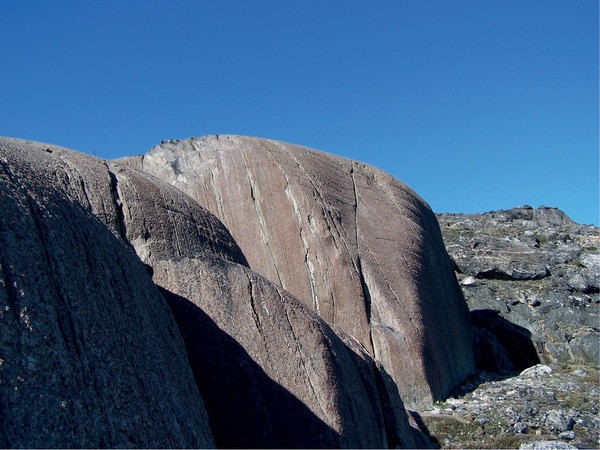
這些稱作片麻岩的古老變質岩發現於北極海海岸。現今出露在地表的這些岩石,過去曾是陸地的根部。科學家表示穿插在這類岩石當中的沉積岩,就像熱機一樣具有讓陸地穩定下來的功能。圖片來源:Jesse Reimink

2024年2月7日 星期三

研究人員揭露了第一塊真正的陸地來自哪種岩石

 原文網址:https://science.ubc.ca/news/researchers-uncover-source-rocks-first-real-continents

地球科學家揭露了陸地形成謎團中缺失的環節,他們修改後的起源故事不需要板塊構造運動開始運作,或是其他外來因素來解釋陸地的形成。反之,上周發表於《自然通訊》(Nature Communications)的發現,只需要在地球歷史最初數億年形成的海底高原,內部發生的地質內營力就可以解釋陸地的形成。

三種花崗岩類:英雲閃長岩(tonalite)、奧長花崗岩(trondhjemite)和花崗閃長岩(granodiorite),合稱TTG。

2021年4月7日 星期三

形成生命的前置條件在35億年前已經出現

 原文網址:https://www.gfz-potsdam.de/en/media-and-communication/news/details/article/preconditions-for-life-already-35-billion-years-ago/

微生物誕生所需的條件在35億年前就已經存在於我們的星球。一組國際團隊從澳洲馬布爾巴的德雷瑟礦坑取出硫酸鋇(重晶石),研究裡面的微小液包體後得出了這項結論。在他們發表於期刊《自然通訊》(Nature Communications)的文章「35億年前的液包體保存了微生物形成的原料」當中,研究人員提出可以作為微生物養分的有機碳化合物在當時就已經存在。論文第一作者為德國哥廷根大學的Helge Mißbach,而德國地球科學研究中心(GFZ)的Volker Lüders也參與其中,他於有機地球化學部門分析了液包體中氣體的碳同位素。

這些富含氣體的液包體中帶有二氧化碳和甲烷,它們是在宿主礦物(此處為石英)的晶體成長過程當中被包進來的。圖片來源:Volker Lüders

2020年3月17日 星期二

延誤送達!水、碳、氮並沒有在一開始就供應給地球


延誤送達!水、碳、氮並沒有在一開始就供應給地球
在發表於《自然》(Nature)的論文中,科隆大學的科學家對地球生命和海洋的起源有了重大的新發現。他們測量保存在格陵蘭最古老的地函岩石之後,顯示出跟過往的假設相反,生命演化必需的元素要在地球幾乎完全成形時才抵達地球。
出露在格陵蘭西南部地表,年代有38億年的地函岩石。圖片來源:Kristoffer Szilas

2018年7月27日 星期五

透過分析硫而證實氧氣出現的時間


透過分析硫而證實氧氣出現的時間
萊斯大學的科學家利用河水證實大氣中的氧含量在27億年前開始上升
Mike Williams
科學家長久以來認為氧氣在27億年前開始出現在地球的低層大氣中,使得我們所知的許多生命得以誕生。而一位萊斯大學的研究人員得到了新的證據來支持這個數字。
此為加拿大安大略省沃瓦鎮的高山瀑布。這些河水流過並侵蝕了蘇必略穩定地塊露出的古老岩石,其中蘊含了地球大氣在27億年前如何演變的線索。一項由萊斯大學進行的研究,顯示這些岩石中由硫寫下的紀錄標示出地球大氣當時出現了劇烈變化,進而使複雜的生命得以誕生。圖片來源:Tom Samworth/www.itsabouttravelling.com

2018年1月22日 星期一

太古宙的氧氣綠洲

太古宙的氧氣綠洲
Maya L. Gomes
在大氣氧濃度呈兩階段上升的過程中,第一階段發生在太古宙結束之際。分析黃鐵礦的硫和鐵同位素,顯示太古宙中期的沿岸環境有個地方處於局部氧化的狀態。
大約在25億年前,地球大氣的氧濃度突然開始飆升。此次「大氧化事件」(Great Oxidation Event)造成地表的生態系從無氧為主轉變成有氧狀態,最終使地球演化出複雜的生命形式。藍綠菌是此次變化的推手之一,這種細菌演化出的能力可以把水當作電子供應者來獲得能量,並釋放出副產物――氧氣。但是科學家仍不清楚大氧化事件是在產氧光合作用演化出來之後立刻發生,或者是一段時間之後才因為其他演化革新或是環境因素而引發。Eickmann等人在《自然―地質科學》(Nature Geoscience)撰寫的論文中,呈現的證據指出大約在30億年前的太古宙中期,海洋近岸地區有座氧氣綠洲。意謂藍綠菌演化出產氧光合作用之後過一段時間大氣才開始出現大規模的氧化現象。
由於太古宙中期(32億至28億年前)位於大氧化事件發生之前,所以一般認為當時的大氣幾乎是處在無氧狀態。在無氧大氣下,光化學反應可以造成跟質量無關的硫同位素分餾。因此,老於24.5億年前的岩石中保有跟質量無關的硫同位素訊號而之後的岩石卻沒有,通常被視為大氧化事件時氧氣濃度上升的決定性證據。然而,跟質量無關的硫訊號卻在太古宙中期沉寂下來而跟前述現象形成矛盾。這可能是因為當時大氣光化學作用有所改變或者是被跟質量相關的硫同位素訊號淡化所導致。造成後者的可能嫌犯之一是微生物進行的硫酸鹽還原作用,它產生的硫會帶有跟質量相關的訊號。因此,有人認為大氣氧濃度上升加上海洋硫酸鹽增加,造成微生物硫酸鹽還原作用產生的硫增加,導致跟質量無關的硫同位素訊號在當時減弱。但是,以往缺乏證據可以指出太古宙中期有發生跟質量相關的分餾作用,使得這項解釋的說服力不足。
Eickmann和其同事決心要解決此矛盾。他們呈現的硫同位素數據來自南非沉積岩中的黃鐵礦,其形成於30億年前卡普瓦克拉通(Kaapvaal Craton)上受到潮汐影響的淺海環境。數據中的黃鐵礦有兩種不同類型:全岩樣品磨碎後取出的浸染狀黃鐵礦細粒,以及用微鑽孔得到的黃鐵礦結核樣品。浸染狀黃鐵礦細粒跟過往研究一致,並沒有確切證據顯示曾經發生過跟質量相關的硫同位素分餾作用。相較之下,黃鐵礦結核的硫同位素訊號卻指示了在富含硫酸鹽的環境下,由微生物進行的跟質量相關的硫同位素分餾作用。相當重要的一點是,兩種類型的黃鐵礦都含有跟質量無關的硫同位素訊號,表示它們是在幾乎無氧的大氣中沉積而成。因此,當時必定有一座維持高硫酸鹽濃度的氧氣綠洲,使得黃鐵礦結核擁有跟質量相關的硫同位素訊號。
為了進一步探討太古宙中期淺海環境氧化還原條件的不均情形以及生物地球化學循環,Eickmann和其同事也分析了鐵同位素。他們指出相較於元古宙中期從熱泉進入深海的鐵,黃鐵礦結核的鐵缺乏重同位素。來自熱泉的鐵在上湧過程中重同位素會逐漸減少,這是因為氧化反應以及後續的沉澱作用所造成(經由微生物參與的作用或者有自由氧的情況下發生的非生物作用)。Eickmann等人假設剩餘的鐵到達近岸環境時都已經完全氧化,因此含有較輕的鐵同位素訊號。而這些鐵之後在沉積物內部被還原時,就成為了黃鐵礦結核的原料。
要把硫和鐵同位素訊號解釋成局部地區處於氧化環境,所仰賴的前提是黃鐵礦形成於成岩作用的早期,因此仍保有當時近岸環境的資訊。作者提出地球化學和組構證據來佐證這些黃鐵礦結核跟其他太古宙的黃鐵礦結核研究類似,都顯示了原生環境的訊號。如果此篇研究中的黃鐵礦結核是由沉積物裡的浸染狀黃鐵礦在成岩階段早期溶解而形成,解開兩者之間的硫同位素訊號為何不一樣,或許可以提供額外資訊讓科學家瞭解元古宙中期海洋氧化還原條件不均的情形。
Eickmann和其同事雖然讓我們更加瞭解太古宙中期為何跟質量無關的硫同位素訊號會沉寂下來,但是氧氣綠洲的解釋本質上來說仍然是出現在局部地區的現象。從這4億年之間堆積的沉積物中得到的數據,都可以發現硫同位素訊號有沉寂下來的情形。因此,它和氧氣綠洲這種局部現象之間的關連仍然是有待解決的難題。此外,在太古宙中期之後的太古宙晚期,如果陸上黃鐵礦持續跟氧氣作用而風化,使得海洋繼續累積硫酸鹽,那麼跟質量無關的硫同位素訊號應該會越來越淡。但實際上,太古宙晚期跟質量無關的硫同位素訊號卻比較強。這或許暗示了在大氧化事件發生之前,太古宙晚期的氧氣濃度曾一度下降過。或者是硫循環內部還有別種未知作用,能改變大氣的光化學反應而強化跟質量無關的硫同位素訊號。
太古宙結束之際為何大氣氧濃度會快速上升仍然是個謎團。已經出現的藍綠菌也許有什麼生物學上的革新,使得它們可以進行更大規模的產氧光合作用,造成大氣中的自由氧快速累積。或者是環境變遷,比方說全球被冰河覆蓋,也有可能改變生物地球化學循環的狀態,使得平衡往大氣氧濃度較高的那側傾斜。不管是透過哪種方式,這些理論都還需要岩石紀錄來驗證。而Eickmann和其同事提供了相當重要的一片線索,在未來解決大氧化事件的謎題時勢必能派上用場。
太古宙硫同位素的紀錄有許多細微差異。Eickmann和其同事提出的地球化學證據雖然並未完全剔除藍綠菌對大氧化事件的重要性,但確實進一步指出在大氧化事件發生許久之前,會釋放氧氣的藍綠菌就已經出現在地球且相當活躍了。

An Archaean oxygen oasis
The first of two stepwise increases in atmospheric oxygen occurred at the end of the Archaean eon. Analyses of sulfur and iron isotopes in pyrite reveal a near-shore environment that hosted locally oxygenated conditions in the Mesoarchaean era.
About 2.5 billion years ago, oxygen concentrations in the Earth’s atmosphere rose sharply. This Great Oxidation Event1,2 caused a transition from dominantly anaerobic to aerobic surface ecosystems, and ultimately led to the evolution of complex life on Earth. The agents of change were cyanobacteria, a type of bacteria that evolved the ability to gain energy using water as an electron donor, and release oxygen as a by-product. But it is not clear whether the Great Oxidation Event immediately followed the evolution of oxygenic photosynthesis or was initiated later by another evolutionary innovation or environmental driver. Writing in Nature Geoscience, Eickmann et al.3 present geochemical evidence for the existence of a near-shore marine oxygen oasis about 3 billion years ago, in the Mesoarchaean era. This suggests a delay between the evolution of oxygenic photosynthesis by cyanobacteria and the later widespread oxygenation of the atmosphere.
As the Mesoarchaean (3.2–2.8 billion years ago) falls before the Great Oxidation Event, atmospheric conditions are thought to have been mostly anoxic. Under an anoxic atmosphere, photochemical reactions can fractionate sulfur isotopes independent of mass. Thus, the change from mass-independent sulfur isotopic signatures preserved in older rocks to their absence in rocks younger than 2.45 billion years old is considered to be conclusive proof of the rise of oxygen at the Great Oxidation Event1. However, the mass-independent sulfur signal is muted during the Mesoarchaean, presenting a conundrum. This muted signal could be due to differences in atmospheric photochemistry4or dilution of the signal by sulfur with a mass-dependent signal. A likely culprit for the latter is the contribution of sulfur with a mass-dependent signal from microbial sulfate reduction. This requires high sulfate levels generated by enhanced oxidative weathering on land under an oxygenated atmosphere. But lack of evidence for mass-dependent fractionations in the Mesoarchaean has previously hampered the interpretation that mass-independent signatures were dampened by inputs from microbial sulfate reduction under elevated atmospheric oxygen and marine sulfate levels.
Eickmann and colleagues3 aim to resolve this conundrum. They present sulfur isotope data from pyrites in sediments from South Africa that were deposited 3 billion years ago in a tide-influenced, shallow-marine environment on the Kaapvaal Craton. The data come from two distinct types of pyrites: finely disseminated pyrite from powdered whole-rock samples and pyrite nodules that were sampled by micro-drilling. The finely disseminated pyrites show no conclusive evidence of mass-dependent sulfur isotope fractionation, in line with previous studies. In contrast, sulfur isotope signatures from the pyrite nodules are indicative of mass-dependent sulfur fractionation by microbial sulfate reduction in a sulfate-rich environment. Importantly, both types of pyrite carry mass-independent sulfur isotope signals indicating that they were deposited under a largely anoxic atmosphere. Thus, a localized oxygen oasis must have maintained sufficiently high sulfate levels to impart the mass-dependent sulfur isotope signals in the pyrite nodules.
To further explore redox heterogeneity and biogeochemical cycling in this Mesoarchaean shallow-marine environment, Eickmann and colleagues also analyse iron isotopes. They show that the pyrite nodules are depleted in the heavy iron isotope relative to iron that entered the Mesoarchaean deep sea from hydrothermal vents. The hydrothermally sourced iron became progressively depleted during upwelling owing to oxidation and subsequent precipitation, either by microbially mediated reactions or abiotic reactions in the presence of free oxygen. Eickmann et al. hypothesize that the residual iron reaching the near-shore environment was completely oxidized, inheriting the light isotope signal, and was the source of iron for pyrite nodule formation after subsequent reduction in the sediment.
The interpretation that the sulfur and iron isotopes indicate locally oxidized conditions relies on the assumption that the pyrite nodules were formed during early diagenesis and thus preserve information about the near-shore environment. The authors present geochemical and textural evidence in support of a primary environmental signal, similar to other Archaean pyrite nodule studies5. Understanding why the nodule pyrites in this study have different sulfur isotope signals from the disseminated pyrites if they formed from dissolution of disseminated pyrite in the sediments during early diagenesis6 may provide additional information about redox heterogeneity in Mesoarchaean oceans.
Although Eickmann and colleagues advance our understanding of the muted mass-independent signal in the Mesoarchaean, the oxygen oasis interpretation is, by nature, a localized condition. Thus, a challenge remains to explain how these local conditions might be related to the muted sulfur signature that is found in all the data generated from sediments deposited over approximately 400 million years. Further, after the Mesoarchaean — in the Neoarchaean — the mass-independent sulfur signal should continue to be increasingly diluted as sulfate accumulates in the ocean through oxidative weathering of terrestrial pyrite. But, in fact, the mass-independent signal is stronger in the Neoarchaean4. This could imply that the oxygen levels decreased in the Neoarchaean before the Great Oxidation Event. Alternatively, there may be additional processes, not yet recognized, of sulfur cycling associated with changing atmospheric photochemistry that strengthens the mass-independent signal.
The cause of the rapid rise of atmospheric oxygen at the end of the Archaean remains enigmatic. Biological innovations by existing cyanobacteria could have led to an expansion of their oxygenic photosynthetic activity and the accumulation of free oxygen in the atmosphere7. Or environmental changes, such as a global glaciation, could have led to a state change in biogeochemical cycling that tipped the scale towards higher atmospheric oxygen levels8. Either way, these hypotheses need to be tested in the rock record, and Eickmann and colleagues contribute an important piece of evidence that will be used to solve the mystery of the Great Oxidation Event.
There are many nuances in the sulfur isotope record of the Archaean. Although not necessarily absolving the cyanobacteria of responsibility, Eickmann and colleagues3provide further geochemical evidence to suggest that oxygen releasing cyanobacteria were present and active long before the Great Oxidation Event.
原始論文:Benjamin Eickmann, Axel Hofmann, Martin Wille, Thi Hao Bui, Boswell A. Wing & Ronny Schoenberg. Isotopic evidence for oxygenated Mesoarchaean shallow oceans. Nature Geoscience, 2018; Doi:10.1038/s41561-017-0036-x
引用自:Maya L. Gomes. An Archaean oxygen oasis. Nature Geoscience, 2018.


2017年9月25日 星期一

地球化學:地殼改變造成大氣氧化

地球化學:地殼改變造成大氣氧化
大氣中的氧對於複雜生命的存活與生長來說至關重要。在地球歷史中有將近一半的時光,地球大氣處於缺氧狀態。接著,於23至24億年前左右發生的大氧化事件中(Great Oxygenation Event ,GOE)氧氣含量急遽上升,開啟了大氣氧濃度逐步上升的趨勢。是什麼原因造成了大氧化事件時氧氣濃度飆升,至今仍未明瞭。Smit和Mezger在《自然―地質科學》(Nature Geoscience )撰寫的文章中,提出約莫在大氧化事件發生的10億年之前,上部大陸地殼總成分產生了改變,造成地表化學反應消耗的氧氣減少,使得大氣中的氧氣可以累積起來。
地球大氣中的氧氣大部分是經由植物(包括浮游植物)或藍綠菌進行的光合作用產生。因此大氧化事件或許跟藍綠菌族群增加有關。然而,在大氧化事件時藍綠菌已經能形成稱作「氧氣綠洲」的小規模有氧環境,所以它們演化出來的時間很可能比事件早上許多。較早之前的大氣氧氣增加可能會被海水和大陸的成分抵銷:像是從太古宙海底熱泉流入海洋的還原鐵,以及年輕地球特有鐵含量較豐富的基性地殼。任何出現在大氣中的自由氧都會跟這類還原物質反應,造成氧被吸收而阻止它們在大氣中累積。因此,只有地殼成分出現變化之後,氧氣才能在大氣中聚積。不過,妨礙大氣氧化的吸收過程其確切性質仍然眾說紛紜。
Smit和Mezger彙整出全球碎屑沉積物的化學成分資料庫,年代涵蓋了地球歷史大部分時間。它們利用稀有元素鉻和鈾的比例(以太古宙之後來自大陸地殼的沉積物當作現今平均值進行標準化),重建出地殼礦物組成隨時間如何變化。具體來說,研究人員是利用了難熔礦物(refractory mineral)碎屑中鉻和鈾的分異作用彼此不同的特性。除非受到有氧風化作用而影響到溶解度,不然這兩種元素在岩石裡都是屬於不活動元素。有氧風化進行時,鉻會跟鉻鐵礦之類的礦物結合,鈾則會跟鋯石之類的礦物結合。但是,因為鋯石幾乎不會存在於基性或超基性地殼中,所以沉積物的鉻/鈾比可以用來指示源區成分為何。研究人員的觀察結果跟過去研究一致:在大約33至24億年前地殼成分發生了改變,上部大陸地殼的性質從基性―超基性岩為主轉變成酸性岩為主;礦物組成也從橄欖石和輝石為主,變成含有石英和長石之類的礦物。
Smit和Mezger根據他們建立的鉻/鈾資料庫,提出基性―超基性地殼中的礦物在熱水置換過程中會因為水合作用形成蛇紋石類礦物。此類礦物在進行脫氧作用時會把OH原子團納入自己的結晶構造並釋放出氫氣。這種反應造成母岩轉變成典型太古宙綠岩帶中出露的蛇紋岩(圖一)。由於蛇紋岩化會促成還原性物質產生,因此有蛇紋岩在的地表水鹼度可能會變得相當高並影響藍綠菌的生長環境,使其可以吸收細菌產生的氧氣。
圖一:西格陵蘭南方伊蘇阿綠岩帶的蛇紋岩,其年代超過37億年。

Smit and Mezger現在提出這種太古宙上部大陸地殼的常見成分或許能吸收氧氣,因而抑制早期地球大氣中的氧含量。(Source: Elis Hoffmann)
地殼從基性為主轉變成較為酸性可能跟全球地質作用的動力機制改變有關,從靜止蓋層(stagnant lid)的構造作用型態變成開始跟今日運行的板塊構造作用較為類似。隨著隱沒作用開始進行,基性上部地殼受到侵蝕並循環回地函,造成地殼中層演化程度較高的酸性地殼露出地表。基性地殼減少造成露出地表的蛇紋岩變少,使得蛇紋岩化作用再也無法成為大量消耗氧氣的機制,因此讓大氣的氧含量得以增加。
氧氣主要受到蛇紋岩化作用而消耗的模型跟過往提出的假說有所區隔。之前的研究提出藍綠菌族群擴大之後過一段時間大氣氧氣才上升的主因,是地表有許多類型的還原鐵可供氧氣進行還原作用。實際上,Smit和Mezger顯示在某些種類的岩石中鉻/鈾會跟成分有類似的變化,但它們的鐵含量卻都相同,意謂鐵含量並非控制大氣自由氧有多少的主要因素。此外,蛇紋岩化模型也允許太古宙晚期的上部大陸地殼成分存有某種程度的變異範圍。太古宙結束之際蛇紋岩對陸地逕流化學性質的影響逐漸淡去,或許造成海水上層部分處於有氧狀態,而海床之下發生的海洋地殼蛇紋岩化作用則讓太古宙之後的海水底層仍然處在缺氧狀態。
雖然蛇紋岩化作用確實是在大氧化事件發生前將還原作用的反應物帶到環境中的重要作用,但它並非唯一一種。其他可以把氧氣從大氣移除的重要消耗作用包括火山玻璃,基性與超基性岩中含硫礦物的風化;火山氣體變化、水下火山活動增加、以及海中熱泉噴出的鐵發生的沉澱反應。經過30億年之後,較為酸性的海床沉積物進入隱沒帶後可能會改變此處的氧化還原狀態,造成島弧跟陸弧火山噴出更多氧化氣體,而讓大氣進一步氧化。
Smit和Mezger顯示蛇紋岩化作用或許能緩衝太古宙地球的氧化還原狀態,減緩大氣氧氣的累積速率。研究人員現在應該要用數值模型來定量此種過程的重要性,並且跟硫同位素的紀錄比對――其為世上唯一涵蓋此年代的氧氣定量紀錄。如果太古宙時蛇紋岩化作用確實是相當重要的地質作用,則蛇紋岩的低密度可能也會對其他地質作用有深遠影響,像是早期地球的地殼循環過程和大陸地殼的穩定性。

Geochemistry: Oxygenation by a changing crust
Atmospheric oxygen is vital for the development and habitability of complex life. Earth's atmosphere lacked oxygen for nearly half of the planet's history. Oxygen levels then rapidly increased about 2.3 to 2.4 billion years ago, during the Great Oxygenation Event (GOE)1, 2, 3, which initiated a stepwise rise in atmospheric oxygen concentrations1. The reason for this increase during the GOE is unclear. Writing in Nature Geoscience Smit and Mezger4 propose that a change in the bulk composition of the upper continental crust about one billion years before the GOE would have caused a decrease in oxygen-consuming reactions at Earth's surface, allowing oxygen to build up in the atmosphere.
Most of Earth's atmospheric oxygen is produced via photosynthesis by plants (including phytoplankton) and cyanobacteria. The GOE is thus probably related to an increasing population of cyanobacteria. However, cyanobacteria are likely to have evolved much earlier than the GOE5, when they formed oxygen oases — small-scale oxidized environments. An earlier increase in atmospheric oxygen could have been mitigated by the composition of the oceans and continents1,6, 7, 8: reducing agents such as reduced iron introduced by hydrothermal fluids into the Archaean oceans, as well as the more iron-rich mafic crust that characterized the younger Earth, may have reacted with any free oxygen, creating oxygen sinks that prevented its accumulation in the atmosphere. Only with a change in crustal composition could oxygen concentrate in the atmosphere. However, the precise nature of the sinks that hampered oxygenation of the atmosphere is ambiguous.
Smit and Mezger4 compile a global database of clastic sediment chemical compositions that covers most of Earth's history. Using the ratio of the trace elements Cr and U (normalized to the modern average value for post-Archaean sediment derived from continental crust), they reconstruct changes in crustal mineral composition through time. Specifically, the researchers take advantage of the different partitioning behaviours of Cr and U in refractory detrital minerals — both elements are immobile unless oxidative weathering influences the solubility. During oxidative weathering, Cr combines with minerals such as chromites, while U combines with minerals such as zircon. However, zircon is largely absent in mafic and ultramafic crust, so the Cr/U ratio can be used as a fingerprint of the composition of the source area for the sediments. In line with past work6, 7, 8, the researchers observe a change in crustal composition about 3.3 to 2.4 billion years ago from a dominantly mafic–ultramafic upper continental crust that consisted mainly of minerals such as olivine and pyroxene, to a dominantly felsic upper crustal composition, comprising minerals such as quartz and feldspar.
Based on their Cr/U database, Smit and Mezger propose that minerals within the mafic–ultramafic crust were hydrated during hydrothermal alteration, forming serpentine minerals. Serpentines are a class of minerals that incorporate OH groups into their crystal lattice and release H2 in oxygen-scavenging reactions4. These reactions transform the host rock into a serpentinite, which is found exposed in typical Archaean greenstone belts (Fig. 1). Since serpentinization triggers the production of reducing species4, surface waters in the presence of serpentinites would have been highly alkaline and could have influenced cyanobacterial habitats, acting as a sink for the bacteria-produced oxygen.
Figure 1: Serpentinites from the Isua Greenstone Belt of southern West Greenland, which is more than 3.7 billion years old.
Smit and Mezger4 now argue that these typical components of Archaean upper continental crust may have acted as an oxygen sink, suppressing oxygen levels in Earth's early atmosphere.   Source: Elis Hoffmann

The transition from a dominantly mafic to a more felsic crust was probably related to a changing style of global geodynamics, from a stagnant-lid tectonic regime towards the onset of plate tectonic processes similar to those active today9. With the onset of subduction, the upper mafic crust was eroded and recycled into the mantle, leaving the more evolved felsic crust from mid-crustal levels exposed at the surface of the continents. Removal of the mafic crust would reduce the amount of exposed serpentinites, minimizing serpentinization as an important sink for oxygen thereafter, and allowing oxygenation of the atmosphere.
The model of serpentinization as a primary oxygen sink stands independent from previous suggestions that the higher abundance of reduced iron species available for oxygen reduction was responsible for the delay in the rise of atmospheric oxygen following the expansion in cynobacterial populations. Indeed, Smit and Mezger show that the Cr/U ratios are similar in a number of rock types with variable compositions, yet the same iron abundance, implying that iron content was not the primary control on free oxygen availability. The serpentinization model also leaves some freedom for compositional heterogeneities within late Archaean upper continental crust. The dilution of the influence of serpentinites on the chemistry of continental runoff by the end of the Archaean may have led to partial oxidation of the upper ocean water column4, while sub-seafloor serpentinization in the oceanic crust kept the lower water column anoxic beyond the Archaean1.
Although serpentinization is certainly an important process in introducing reduced reagents into the environment before the GOE, it is not the only process. Other key sinks for extracting oxygen from the atmosphere include weathering of volcanic glasses8, sulfur-bearing minerals in mafic and ultramafic rocks7, a change in volcanic gas composition10, increased subaerial volcanism11, and hydrothermal Fe precipitation in seawater3. After three billion years, the subduction of more felsic ocean floor sediments may have changed the redox conditions in subduction zones, potentially leading to more oxidized gases being emitted at arc volcanoes, triggering further oxygenation7.
Smit and Mezger4 show that serpentinization may have buffered the redox conditions on the Archaean Earth, mitigating the accumulation of atmospheric oxygen. The importance of this process should now be quantified using numerical models and compared with the sulfur isotope record — the only quantitative record of oxygen on Earth across this time period2. If serpentinization was indeed a critical process during the Archaean, the low density of serpentine may also have had a profound impact on geodynamic processes such as crustal recycling and stabilization of continental crust on the early Earth.
原始論文:Matthijs A. Smit and Klaus Mezger. Earth’s early O2 cycle suppressed by primitive continents. Nature Geoscience, 2017.  doi:10.1038/ngeo3030.
引用自:J. Elis Hoffmann. Geochemistry: Oxygenation by a changing crust. Nature Geoscience, 2017. doi:10.1038/ngeo3038

https://www.nature.com/ngeo/journal/vaop/ncurrent/full/ngeo3038.html