地球化學:地殼改變造成大氣氧化
大氣中的氧對於複雜生命的存活與生長來說至關重要。在地球歷史中有將近一半的時光,地球大氣處於缺氧狀態。接著,於23至24億年前左右發生的大氧化事件中(Great
Oxygenation Event ,GOE)氧氣含量急遽上升,開啟了大氣氧濃度逐步上升的趨勢。是什麼原因造成了大氧化事件時氧氣濃度飆升,至今仍未明瞭。Smit和Mezger在《自然―地質科學》(Nature Geoscience )撰寫的文章中,提出約莫在大氧化事件發生的10億年之前,上部大陸地殼總成分產生了改變,造成地表化學反應消耗的氧氣減少,使得大氣中的氧氣可以累積起來。
地球大氣中的氧氣大部分是經由植物(包括浮游植物)或藍綠菌進行的光合作用產生。因此大氧化事件或許跟藍綠菌族群增加有關。然而,在大氧化事件時藍綠菌已經能形成稱作「氧氣綠洲」的小規模有氧環境,所以它們演化出來的時間很可能比事件早上許多。較早之前的大氣氧氣增加可能會被海水和大陸的成分抵銷:像是從太古宙海底熱泉流入海洋的還原鐵,以及年輕地球特有鐵含量較豐富的基性地殼。任何出現在大氣中的自由氧都會跟這類還原物質反應,造成氧被吸收而阻止它們在大氣中累積。因此,只有地殼成分出現變化之後,氧氣才能在大氣中聚積。不過,妨礙大氣氧化的吸收過程其確切性質仍然眾說紛紜。
Smit和Mezger彙整出全球碎屑沉積物的化學成分資料庫,年代涵蓋了地球歷史大部分時間。它們利用稀有元素鉻和鈾的比例(以太古宙之後來自大陸地殼的沉積物當作現今平均值進行標準化),重建出地殼礦物組成隨時間如何變化。具體來說,研究人員是利用了難熔礦物(refractory mineral)碎屑中鉻和鈾的分異作用彼此不同的特性。除非受到有氧風化作用而影響到溶解度,不然這兩種元素在岩石裡都是屬於不活動元素。有氧風化進行時,鉻會跟鉻鐵礦之類的礦物結合,鈾則會跟鋯石之類的礦物結合。但是,因為鋯石幾乎不會存在於基性或超基性地殼中,所以沉積物的鉻/鈾比可以用來指示源區成分為何。研究人員的觀察結果跟過去研究一致:在大約33至24億年前地殼成分發生了改變,上部大陸地殼的性質從基性―超基性岩為主轉變成酸性岩為主;礦物組成也從橄欖石和輝石為主,變成含有石英和長石之類的礦物。
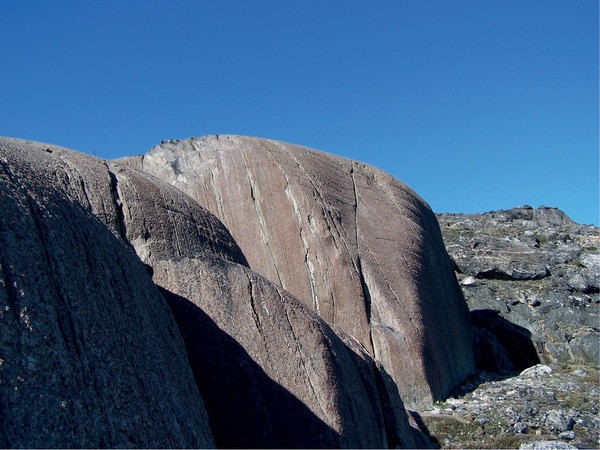
Smit和Mezger根據他們建立的鉻/鈾資料庫,提出基性―超基性地殼中的礦物在熱水置換過程中會因為水合作用形成蛇紋石類礦物。此類礦物在進行脫氧作用時會把OH原子團納入自己的結晶構造並釋放出氫氣。這種反應造成母岩轉變成典型太古宙綠岩帶中出露的蛇紋岩(圖一)。由於蛇紋岩化會促成還原性物質產生,因此有蛇紋岩在的地表水鹼度可能會變得相當高並影響藍綠菌的生長環境,使其可以吸收細菌產生的氧氣。
圖一:西格陵蘭南方伊蘇阿綠岩帶的蛇紋岩,其年代超過37億年。
Smit and
Mezger現在提出這種太古宙上部大陸地殼的常見成分或許能吸收氧氣,因而抑制早期地球大氣中的氧含量。(Source: Elis Hoffmann)
地殼從基性為主轉變成較為酸性可能跟全球地質作用的動力機制改變有關,從靜止蓋層(stagnant lid)的構造作用型態變成開始跟今日運行的板塊構造作用較為類似。隨著隱沒作用開始進行,基性上部地殼受到侵蝕並循環回地函,造成地殼中層演化程度較高的酸性地殼露出地表。基性地殼減少造成露出地表的蛇紋岩變少,使得蛇紋岩化作用再也無法成為大量消耗氧氣的機制,因此讓大氣的氧含量得以增加。
氧氣主要受到蛇紋岩化作用而消耗的模型跟過往提出的假說有所區隔。之前的研究提出藍綠菌族群擴大之後過一段時間大氣氧氣才上升的主因,是地表有許多類型的還原鐵可供氧氣進行還原作用。實際上,Smit和Mezger顯示在某些種類的岩石中鉻/鈾會跟成分有類似的變化,但它們的鐵含量卻都相同,意謂鐵含量並非控制大氣自由氧有多少的主要因素。此外,蛇紋岩化模型也允許太古宙晚期的上部大陸地殼成分存有某種程度的變異範圍。太古宙結束之際蛇紋岩對陸地逕流化學性質的影響逐漸淡去,或許造成海水上層部分處於有氧狀態,而海床之下發生的海洋地殼蛇紋岩化作用則讓太古宙之後的海水底層仍然處在缺氧狀態。
雖然蛇紋岩化作用確實是在大氧化事件發生前將還原作用的反應物帶到環境中的重要作用,但它並非唯一一種。其他可以把氧氣從大氣移除的重要消耗作用包括火山玻璃,基性與超基性岩中含硫礦物的風化;火山氣體變化、水下火山活動增加、以及海中熱泉噴出的鐵發生的沉澱反應。經過30億年之後,較為酸性的海床沉積物進入隱沒帶後可能會改變此處的氧化還原狀態,造成島弧跟陸弧火山噴出更多氧化氣體,而讓大氣進一步氧化。
Smit和Mezger顯示蛇紋岩化作用或許能緩衝太古宙地球的氧化還原狀態,減緩大氣氧氣的累積速率。研究人員現在應該要用數值模型來定量此種過程的重要性,並且跟硫同位素的紀錄比對――其為世上唯一涵蓋此年代的氧氣定量紀錄。如果太古宙時蛇紋岩化作用確實是相當重要的地質作用,則蛇紋岩的低密度可能也會對其他地質作用有深遠影響,像是早期地球的地殼循環過程和大陸地殼的穩定性。
Geochemistry: Oxygenation by a changing crust
Atmospheric
oxygen is vital for the development and habitability of complex life. Earth's
atmosphere lacked oxygen for nearly half of the planet's history. Oxygen levels
then rapidly increased about 2.3 to 2.4 billion years ago, during the Great
Oxygenation Event (GOE)1, 2, 3, which
initiated a stepwise rise in atmospheric oxygen concentrations1. The reason
for this increase during the GOE is unclear. Writing in Nature
Geoscience Smit and Mezger4 propose
that a change in the bulk composition of the upper continental crust about one
billion years before the GOE would have caused a decrease in oxygen-consuming
reactions at Earth's surface, allowing oxygen to build up in the atmosphere.
Most of
Earth's atmospheric oxygen is produced via photosynthesis by plants (including
phytoplankton) and cyanobacteria. The GOE is thus probably related to an
increasing population of cyanobacteria. However, cyanobacteria are likely to
have evolved much earlier than the GOE5, when they
formed oxygen oases — small-scale oxidized environments. An earlier increase in
atmospheric oxygen could have been mitigated by the composition of the oceans
and continents1,6, 7, 8: reducing
agents such as reduced iron introduced by hydrothermal fluids into the Archaean
oceans, as well as the more iron-rich mafic crust that characterized the
younger Earth, may have reacted with any free oxygen, creating oxygen sinks
that prevented its accumulation in the atmosphere. Only with a change in
crustal composition could oxygen concentrate in the atmosphere. However, the
precise nature of the sinks that hampered oxygenation of the atmosphere is
ambiguous.
Smit and
Mezger4 compile
a global database of clastic sediment chemical compositions that covers most of
Earth's history. Using the ratio of the trace elements Cr and U (normalized to
the modern average value for post-Archaean sediment derived from continental
crust), they reconstruct changes in crustal mineral composition through time.
Specifically, the researchers take advantage of the different partitioning
behaviours of Cr and U in refractory detrital minerals — both elements are
immobile unless oxidative weathering influences the solubility. During
oxidative weathering, Cr combines with minerals such as chromites, while U
combines with minerals such as zircon. However, zircon is largely absent in
mafic and ultramafic crust, so the Cr/U ratio can be used as a fingerprint of
the composition of the source area for the sediments. In line with past work6, 7, 8, the
researchers observe a change in crustal composition about 3.3 to 2.4 billion
years ago from a dominantly mafic–ultramafic upper continental crust that
consisted mainly of minerals such as olivine and pyroxene, to a dominantly
felsic upper crustal composition, comprising minerals such as quartz and
feldspar.
Based on their
Cr/U database, Smit and Mezger propose that minerals within the
mafic–ultramafic crust were hydrated during hydrothermal alteration, forming
serpentine minerals. Serpentines are a class of minerals that incorporate OH
groups into their crystal lattice and release H2 in
oxygen-scavenging reactions4. These
reactions transform the host rock into a serpentinite, which is found exposed
in typical Archaean greenstone belts (Fig. 1). Since
serpentinization triggers the production of reducing species4, surface
waters in the presence of serpentinites would have been highly alkaline and
could have influenced cyanobacterial habitats, acting as a sink for the
bacteria-produced oxygen.
Figure 1:
Serpentinites from the Isua Greenstone Belt of southern West Greenland, which
is more than 3.7 billion years old.
Smit and Mezger4 now
argue that these typical components of Archaean upper continental crust may
have acted as an oxygen sink, suppressing oxygen levels in Earth's early
atmosphere. Source: Elis Hoffmann
The transition from a
dominantly mafic to a more felsic crust was probably related to a changing
style of global geodynamics, from a stagnant-lid tectonic regime towards the
onset of plate tectonic processes similar to those active today9. With the onset of subduction, the upper mafic crust was eroded
and recycled into the mantle, leaving the more evolved felsic crust from
mid-crustal levels exposed at the surface of the continents. Removal of the
mafic crust would reduce the amount of exposed serpentinites, minimizing
serpentinization as an important sink for oxygen thereafter, and allowing
oxygenation of the atmosphere.
The model of
serpentinization as a primary oxygen sink stands independent from previous
suggestions that the higher abundance of reduced iron species available for
oxygen reduction was responsible for the delay in the rise of atmospheric
oxygen following the expansion in cynobacterial populations. Indeed, Smit and
Mezger show that the Cr/U ratios are similar in a number of rock types with
variable compositions, yet the same iron abundance, implying that iron content
was not the primary control on free oxygen availability. The serpentinization
model also leaves some freedom for compositional heterogeneities within late
Archaean upper continental crust. The dilution of the influence of
serpentinites on the chemistry of continental runoff by the end of the Archaean
may have led to partial oxidation of the upper ocean water column4, while sub-seafloor serpentinization in the oceanic crust kept
the lower water column anoxic beyond the Archaean1.
Although serpentinization
is certainly an important process in introducing reduced reagents into the
environment before the GOE, it is not the only process. Other key sinks for
extracting oxygen from the atmosphere include weathering of volcanic glasses8, sulfur-bearing minerals in mafic and ultramafic rocks7, a change in volcanic gas composition10, increased subaerial volcanism11, and hydrothermal Fe precipitation in seawater3. After three billion years, the subduction of more felsic ocean
floor sediments may have changed the redox conditions in subduction zones,
potentially leading to more oxidized gases being emitted at arc volcanoes,
triggering further oxygenation7.
Smit and Mezger4 show that serpentinization may have buffered the redox
conditions on the Archaean Earth, mitigating the accumulation of atmospheric
oxygen. The importance of this process should now be quantified using numerical
models and compared with the sulfur isotope record — the only quantitative
record of oxygen on Earth across this time period2. If serpentinization was indeed a critical process during the
Archaean, the low density of serpentine may also have had a profound impact on
geodynamic processes such as crustal recycling and stabilization of continental
crust on the early Earth.
原始論文:Matthijs A. Smit and Klaus Mezger. Earth’s early O2 cycle
suppressed by primitive continents. Nature Geoscience, 2017. doi:10.1038/ngeo3030.
引用自:J.
Elis Hoffmann. Geochemistry: Oxygenation
by a changing crust. Nature
Geoscience, 2017. doi:10.1038/ngeo3038
https://www.nature.com/ngeo/journal/vaop/ncurrent/full/ngeo3038.html